Last updated November 23, 2026
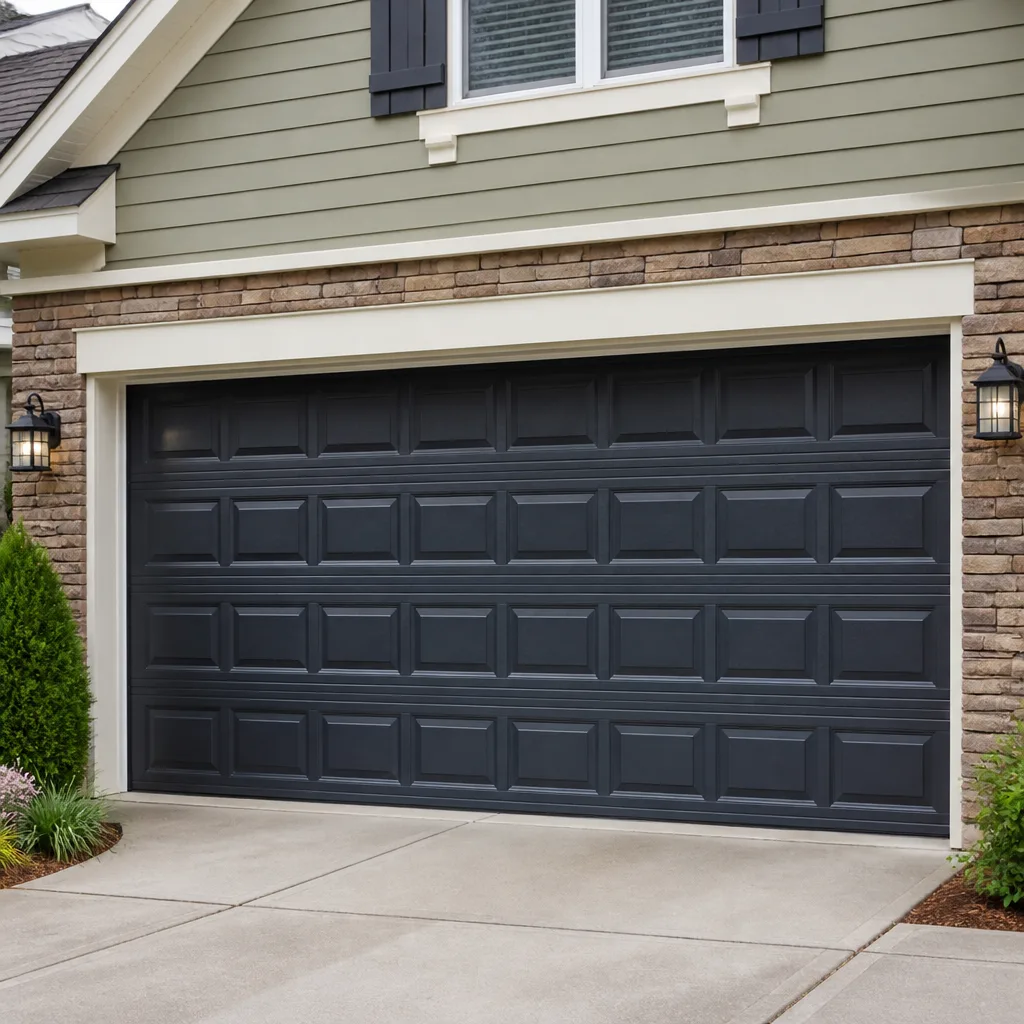 Raised-panel steel
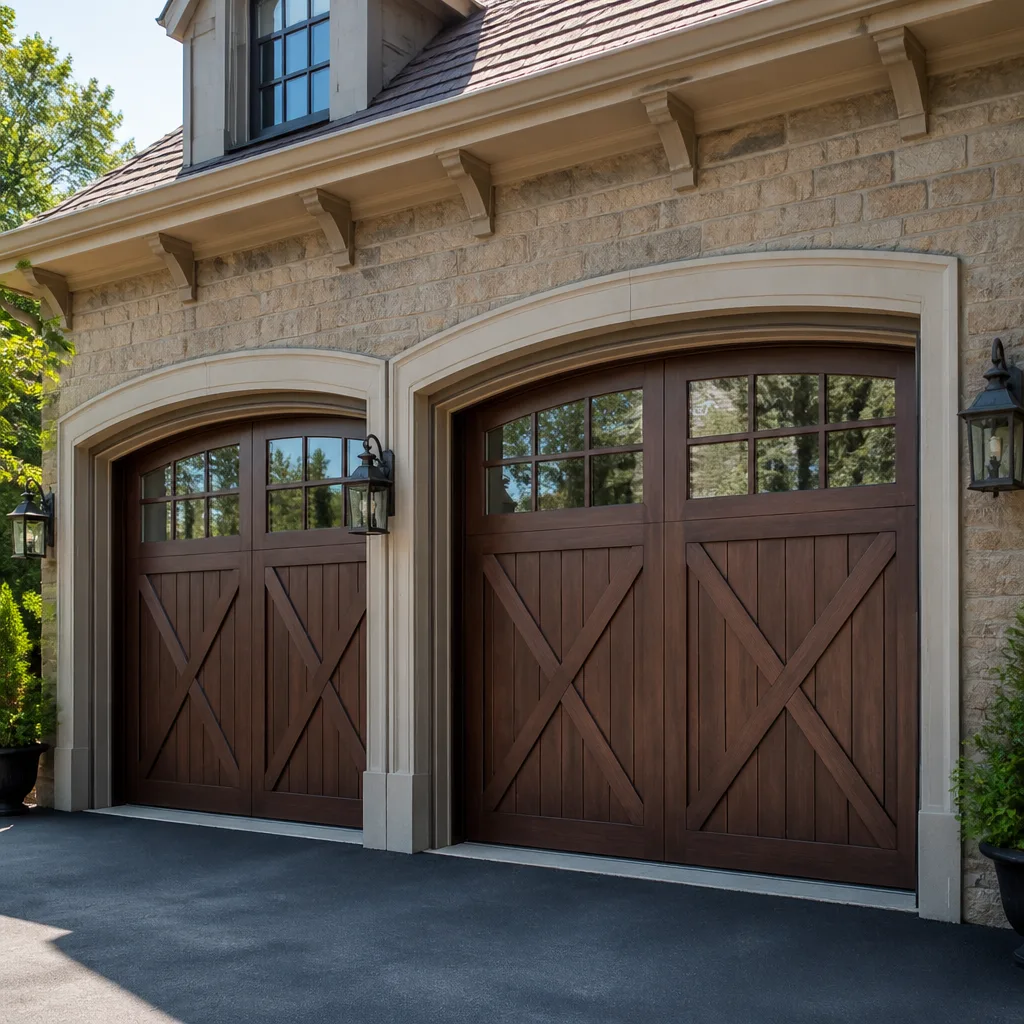 Carriage house
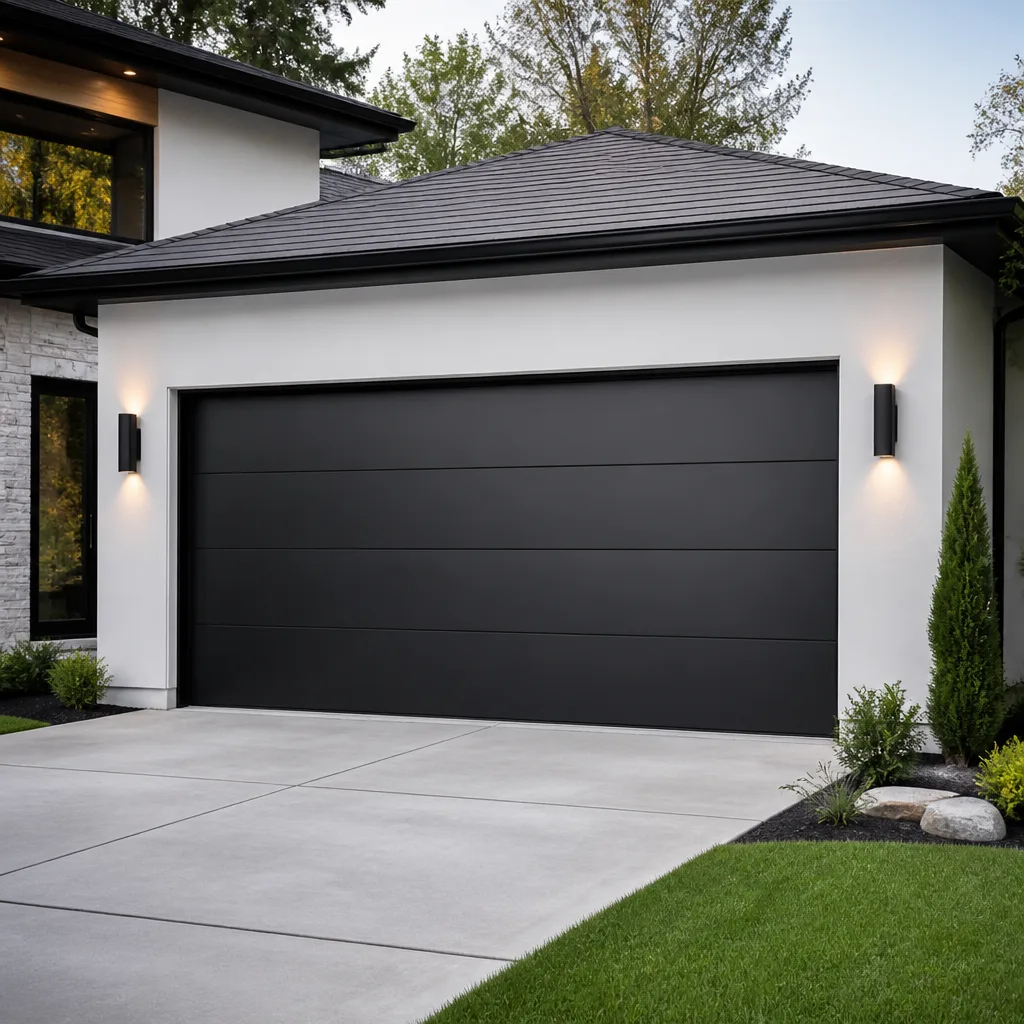 Modern flush
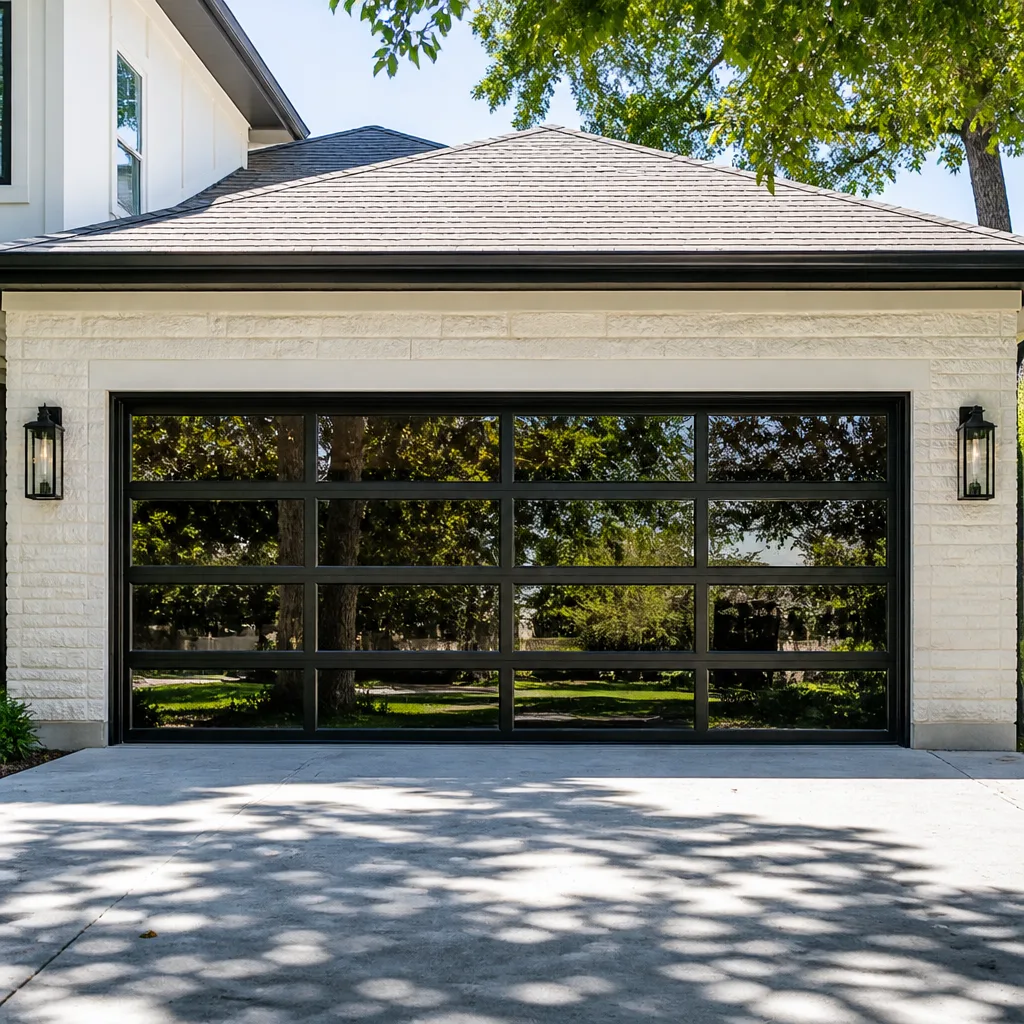 Full-view glass
 LiftMaster openers
 Chamberlain openers
Full 25-point door and opener safety check with every visit - springs, cables, rollers, tracks, and your LiftMaster or Chamberlain opener included
You get a price before we start. It does not change when the pro arrives.
Get your free estimateThe Complete Guide to Garage Doors in Melbourne
Most garage door advice online is written for a house in Phoenix or Atlanta, and it shows. Melbourne, FL sits right on the Atlantic, faces hurricane-season wind events year after year, and lives with salt air that quietly eats through standard hinges, cables, and bottom brackets long before their inland-Orlando counterparts would ever give out. The spring that lasted ten years in a dry climate might go six or seven here. A guide that ignores that reality isn’t much of a guide. This one treats Melbourne as its own climate and its own use case, and walks through what actually fails, what the county asks of your door, which materials survive this zip code, and how to plan inspections around a coastal year. You’ll finish knowing how to make a real decision about your door, not just a guess.
Quick Answer
A garage door in Melbourne, FL needs the same core maintenance as anywhere else, but the coastal environment means faster corrosion on steel hardware, more frequent lubrication, and stricter attention to wind-rated components than most generic guides admit. If your door is more than a decade old, uses standard galvanized hardware, or you don’t know whether it’s rated for hurricane-season wind loads, it’s worth a professional inspection before the next storm season. Most repairs and spring replacements are straightforward when a trained technician looks at them; the costly mistakes come from putting off the small stuff.
Styles & brands we work with
- Raised-panel steel
- Carriage house
- Modern flush
- Full-view glass
- LiftMaster openers
- Chamberlain openers
Table of Contents
- How Melbourne’s Climate Affects Your Garage Door
- Wind-Load Ratings in Brevard County: What Your Door Should Carry
- Storm-Rated vs. Hurricane-Rated Doors: The Difference That Matters
- Which Door Materials Actually Hold Up in Melbourne
- Choosing and Maintaining an Opener System
- Springs, Cables, and the Parts That Fail First
- A Realistic Ownership Timeline for a Melbourne Home
- Repair or Replace? How to Decide
How Melbourne’s Climate Affects Your Garage Door
Salt air and steady humidity are the two forces doing most of the quiet damage on garage doors in Melbourne. Salt is carried inland on the sea breeze and settles on every metal surface facing the outside of your home, and it doesn’t take long for that film to start working on the thin galvanized coating on standard hinges, rollers, and bottom brackets. Add humidity that rarely drops below 60% for long stretches, and you get a mild but constant electrochemical reaction that pits steel and accelerates rust. A powder-coated panel will look fine on the surface while the hardware underneath is quietly going.
Springs feel the climate differently. Torsion and extension springs are under constant tension, and any corrosion on the wire surface shortens the fatigue life of the metal. In our experience across Melbourne, springs that would last a decade in a dry climate often fail closer to six or seven years when they’re the standard oil-tempered type. Powder-coated and oil-tempered springs resist this better, and it’s one of the reasons we recommend upgrading if you’re replacing anyway. A broken spring isn’t just an inconvenience – it’s a safety hazard that needs a trained hand.
Panels take a different beating. Heat cycling from afternoon sun on a west-facing door stresses seams and paint, and a compromised paint film lets humidity creep into the steel underneath. Wood doors in Melbourne need repainting far more often than their manufacturer’s literature suggests, usually every few years rather than the decade often quoted.
- Salt air: attacks galvanized hardware, hinges, cables, and bottom brackets
- Humidity: shortens spring fatigue life and promotes rust on any exposed steel
- Heat cycling: stresses panel seams and paint adhesion on sun-facing doors
- Storm-season wind: puts load on tracks, anchors, and panel connections
Wind-Load Ratings in Brevard County: What Your Door Should Carry
A wind-load rating tells you the wind speed and pressure a door and its anchoring system are engineered to withstand. Brevard County, like most of Florida’s coastal counties, enforces wind-load requirements on new construction and on any door replacement where a permit is pulled – which means when you buy a new door in Melbourne, the county will be looking for documentation that the door and its installation meet the applicable design pressure for your address. What most off-the-shelf doors at a big-box store carry is a generic rating, often far below what a coastal Melbourne home actually needs. That gap is one of the reasons we push homeowners to think about wind rating before they think about color or curb appeal.
Two things determine whether a door passes. First, the door itself: manufacturers like Clopay and Amarr publish wind-load-class ratings for their impact-rated models, and the label or spec sheet should clearly state the design pressure the door is engineered for. Second, the installation: even a rated door fails when its tracks, brackets, and anchors aren’t up to the job, or when they’re screwed into substrate that can’t hold them under load. That’s why wind-load compliance is really an installation question as much as a product question.
If you don’t know what your current door is rated for, the county building department is the place to start; ask them what design pressure applies to your address, and then have a technician read the door’s label and check the anchoring. A door without a rating isn’t necessarily a hazard, but it’s worth understanding what you have before storm season rather than after. When you’re ready to sort out the hardware behind the door, garage door repair is the place to start for anything track, cable, or anchor-related.
Storm-Rated vs. Hurricane-Rated Doors: The Difference That Matters
Storm-rated and hurricane-rated get used interchangeably in marketing, but they don’t mean the same thing, and Melbourne homeowners deserve a straight answer on the gap. A storm-rated door is built and tested to resist wind pressure up to a stated design level, and that’s the minimum bar most Florida coastal counties set for new doors. A hurricane-rated door goes further: it’s typically impact-rated as well, meaning the door panels themselves are engineered to take debris impact without shattering or puncturing. When a windborne object hits a non-impact-rated door, the panel can fail even if the anchoring is fine, and once a panel opens up, the pressure balance changes fast.
Whether you need impact rating or wind rating only depends on your specific address, your insurer, and current code. For most Melbourne homes built or re-doored to modern standards, the door will carry both. Here’s how to tell what you have:
- Look for a manufacturer’s label or rating plate attached to the door, often on the inside of the top panel or on a bracket.
- Check for a design-pressure number in inches of water column or pounds per square foot (psf).
- Look for the word “impact” or a Florida product approval number, which indicates the door has been tested to a specific standard.
- Check the anchoring: brackets, jamb fasteners, and track mounting should all be sized for the door’s rating, not just the door itself.
- If you can’t find the label, ask the county building department for the permit history on the address.
If your door is older than a couple of decades and you have no documentation, it likely predates current wind-load requirements. That doesn’t mean it’s illegal – existing doors are usually grandfathered – but if you’re replacing it or your insurer raises a question, you’ll want to know exactly what you’re working with before you sign a contract. If it’s the opener that’s giving you trouble rather than the door, garage door opener repair covers the motor, sensors, and safety systems.
Which Door Materials Actually Hold Up in Melbourne
The material question in Melbourne isn’t just about looks. Salt air and humidity punish certain materials far more than others, and choosing the right one is the difference between a door that holds up for its full life and one that starts showing problems within a handful of years. Steel remains the most common choice, but the gauge and coating matter enormously. A 24- or 25-gauge steel door with a good hot-dip galvanized base coat and a baked-on polyester finish is the practical sweet spot. A thinner panel with a cheap coating will start rusting at the bottom edge within a few years in a coastal environment.
Aluminum doors resist corrosion much better than steel and are lighter, but aluminum is also softer and dents more easily, so it can struggle if your driveway is close to the door and kids or bikes are involved. Fiberglass performs well against salt but can fade and chalk in strong UV, and the price sits above basic steel. Wood, honestly, is the hardest material to own in Melbourne – beautiful, but it wants repainting far more often than the manufacturer’s literature suggests. Our advice: unless you’re committed to the maintenance, choose a steel door with a strong finish or an aluminum door if you specifically want corrosion resistance.
Clopay and Amarr both make coastal-suitable lines with coating systems that hold up well in this climate. Wayne Dalton offers similar options for value-focused buyers, though the gauge and coating still need checking. Whatever brand you choose, ask about the base coat, the finish coat, and the warranty terms for corrosion – those are the details that separate a door that lasts from one that doesn’t.
- Steel (24-25 gauge, hot-dip galvanized): best all-around for Melbourne when coated properly
- Aluminum: excellent corrosion resistance, dents more easily
- Fiberglass: good salt resistance, watch for UV fading
- Wood: high maintenance in this climate; plan on frequent repainting
Choosing and Maintaining an Opener System
Openers are a supporting actor in the garage door story but they’re also where most of the day-to-day annoyance lives. A door that slams, reverses at random, or stops halfway up usually has an opener problem, not a door problem. Belt-drive openers are quiet and the standard choice for attached garages where noise carries into the house, while chain-drive models are noisier but tougher. Screw-drive sits between the two. If your garage is detached, noise matters less and you can prioritize durability. The popular opener brands we work on – LiftMaster, Chamberlain, Genie, and Craftsman – all have models in every category, and the right one depends on your door’s weight, your wiring, and whether you want smart features.
Modern smart openers add real value in Melbourne: you can check whether the door is closed when you’re away, get alerts if it’s opened, and control it from your phone. That’s genuinely useful during storm season when you’re traveling or at work and want to confirm the door is down. Legacy openers can still be serviced or upgraded. If the motor is sound but the control board is dead, sometimes a repair keeps the unit alive for years more. Other times, the electronics alone cost more than a new unit.
Maintenance is simple and matters: wipe the photo-eye lenses a couple of times a year, test the auto-reverse by placing a small obstacle under the door, and listen for changes in sound. A grinding or popping opener is usually a warning, not a surprise. If it’s going wrong, look at an opener repair before the motor fails completely – and if you’re thinking ahead to a full replacement, garage door installation covers how the door and opener pair up.
Springs, Cables, and the Parts That Fail First
A torsion spring on a sectional door is a coiled steel bar under hundreds of pounds of tension. There is no safe DIY path. If a spring breaks while you’re working on it – or if you try to adjust one without the right winding bars and training – you can be seriously injured, and the door itself can come down hard. Cables are the same story: they carry the tension that the springs generate. That’s the safety caveat, and it’s not a marketing line. It’s the reason spring and cable work is the one part of garage door maintenance we never suggest a homeowner attempt.
That said, knowing the warning signs is useful. Springs typically announce themselves: a loud bang from the garage, a gap in the coil, or a door that suddenly feels twice as heavy to lift. Cables fray at the drum ends and often give a few visible warning signs before they let go – frayed strands, a loose or slack cable, or the door hanging slightly crooked. Rollers and hinges wear slowly: a squeak that wasn’t there last year is a roller or hinge telling you it needs attention. In our experience across Melbourne, a door that’s had no service for several years will show at least one of these.
When it’s time to replace, matched springs should be replaced together. A single spring replaced on one side of a door that has a twin on the other side leaves the door under uneven tension, which shows up later as track drift and roller wear. If you’re replacing springs anyway, consider upgrading to oil-tempered or powder-coated to fight the salt and humidity that shortened the old springs’ life. We offer spring repair as a core service, not an upsell, because that’s what a garage door specialist should be doing. If you don’t yet know what’s wrong with your door, the fastest route is to call and have us look at it.
A Realistic Ownership Timeline for a Melbourne Home
Maintenance schedules written for inland climates don’t work here. Melbourne’s salt air and year-round humidity mean the work needs to happen more often, and storm season sets the calendar. Here’s what a practical ownership timeline looks like for a home with a standard sectional door:
- Every month: a quick visual pass – look for rust spots, listen for new noises, and check that the door reverses on obstruction.
- Every 3-6 months: lubricate hinges, rollers, and springs with a garage-door-specific lubricant (not WD-40, which attracts dust and gums up); wipe down the photo-eye lenses.
- Once a year, well before storm season (late spring): a full inspection – tracks, cables, springs, anchors, brackets, and the wind-load rating label; clear the sensor area and test all safety features.
- Every 2-3 years: tighten all brackets and check the balance of the door by hand (only with the opener disengaged and the door closed first); have a technician look at springs and cables, especially if the door shows rust at the drum ends.
- Every 5-7 years: realistically plan for spring replacement regardless of appearance, given the shorter life span of standard springs in this climate.
- Every 10-15 years: evaluate whether the door itself is still worth repairing versus replacing, factoring in finish condition, hardware wear, and wind-load compliance.
The two anchors that matter most are the pre-storm-season inspection and the annual safety feature test. Everything else is about preventing small problems from turning into big ones. Write the dates into a calendar and you’ll be ahead of most Melbourne homeowners.
Repair or Replace? How to Decide
The repair-or-replace question on a garage door is mostly about three things: age, compliance, and how much of the door is worn. A door that’s a decade or two old, functions quietly, and still has an intact finish almost always makes sense to repair. A door that’s starting to rust through panels, carries no wind-load documentation, and has had two rounds of spring or cable work in the last few years is usually a smarter replacement. The economic pivot point typically lands somewhere around the ten-to-fifteen-year mark for a coastal Melbourne home.
There’s also the question of whether repairing a door with the wrong wind-load rating makes sense at all. If you’re going to keep the home and the door needs a permit anyway, replacing it now gets you a compliant, rated door and a warranty. If you’re repairing just to sell, keep it simple: make it safe and functional and let the buyer decide what to do long-term.
Our strongest advice is to get a proper inspection before making the call, because a trained technician can tell you in twenty minutes whether the door has years left or whether it’s at the end of its working life. If the door is still viable, Melbourne Garage Door Repair Pros can handle the repair; if it’s time to replace, the same team handles the installation, so you’re not handing off to a different company halfway through.
Common Mistakes to Avoid
- Trying to wind a torsion spring yourself. It’s the single most dangerous DIY job in the garage, and the consequences of a slip are severe. Call a trained technician instead.
- Using WD-40 instead of proper lubricant. It feels helpful, but it attracts dust and slowly turns into sticky gum. Use a garage-door-specific lubricant on hinges, rollers, and springs.
- Replacing only one spring of a pair. The door ends up under uneven tension, which shows up as roller wear, crooked travel, and premature failure of the newer spring. Always replace matched springs together.
- Buying a big-box door without a wind-load rating. A cheap stock door can end up failing the county’s design-pressure requirement, forcing a re-do. Confirm the rating before purchase.
- Ignoring the bottom seal and weather stripping. In Melbourne’s humidity, a worn bottom seal lets moisture into the garage and starts the rust process from the ground up.
- Skipping the pre-storm-season inspection. A door that seems fine in April can reveal loose anchors and fatigued springs when the first of the season’s wind events loads it.
- Putting off a failing opener because the door still opens. A struggling opener can damage the door’s chains and trolley over time, turning a cheap repair into a more expensive one.
- Not testing the auto-reverse. It’s a matter of minutes and it’s the single most important safety feature on your door. If it fails, stop using the door until it’s fixed.
See the difference
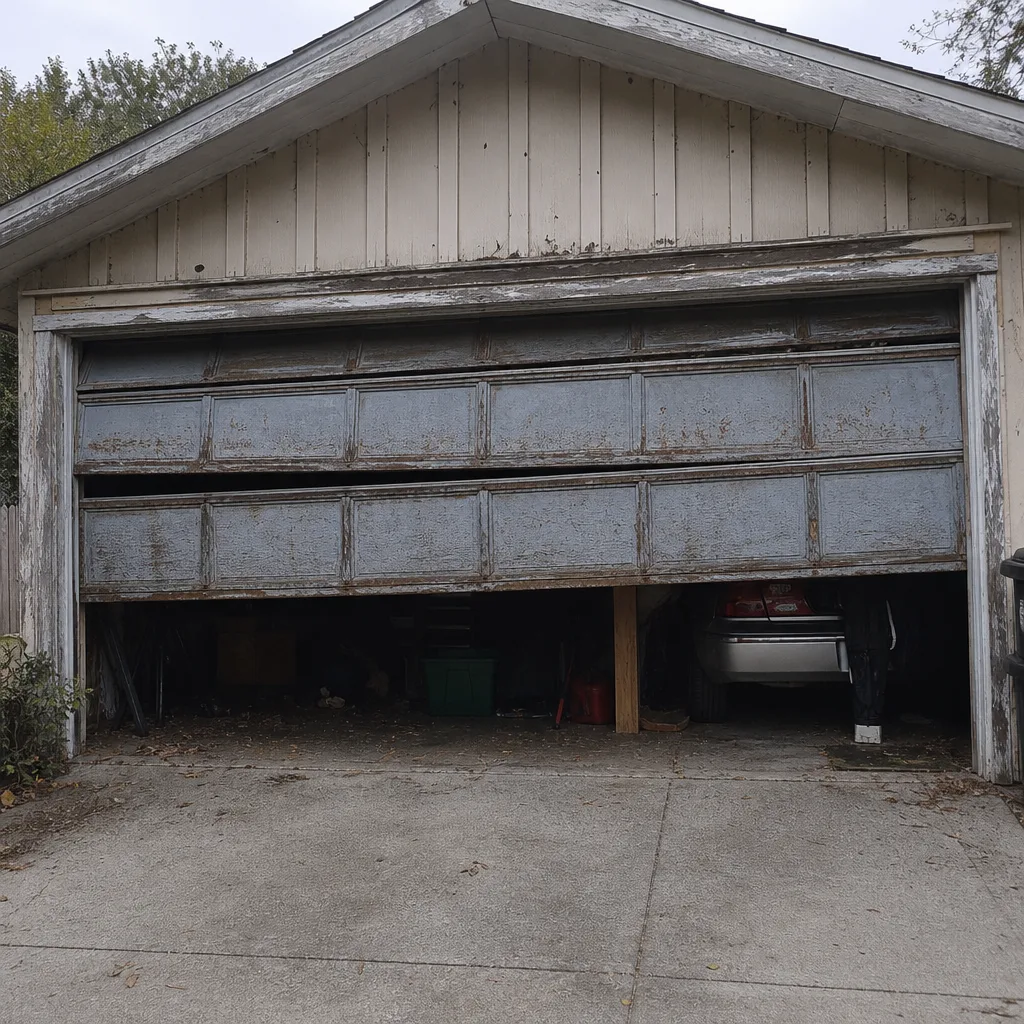 Before
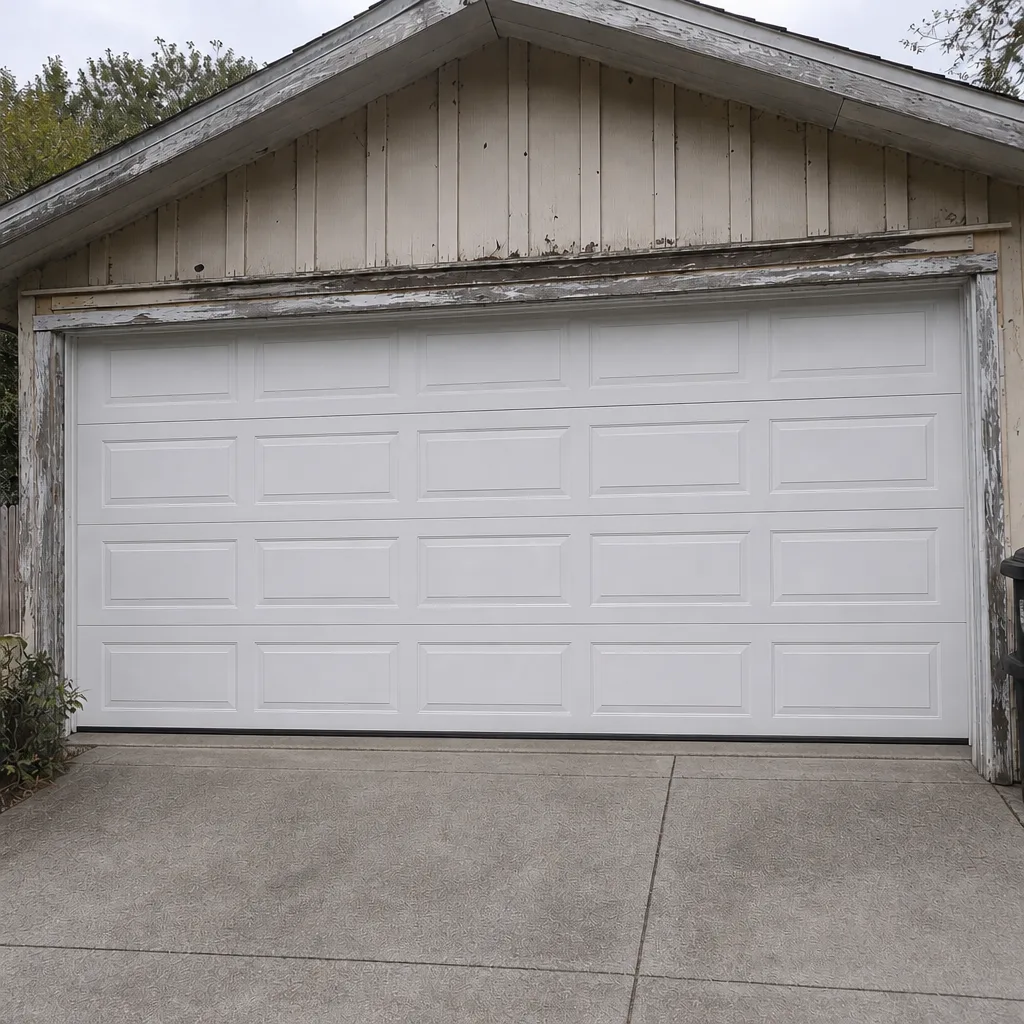 After
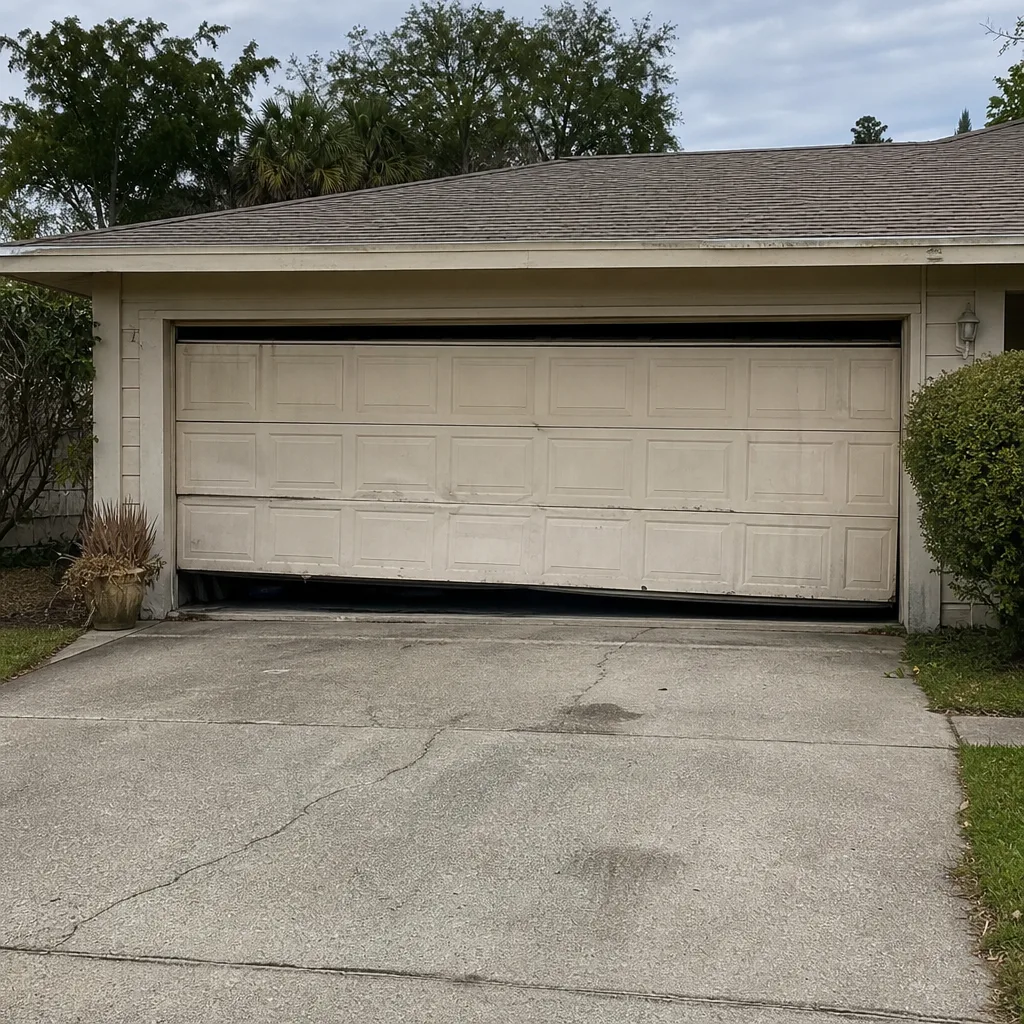 Before
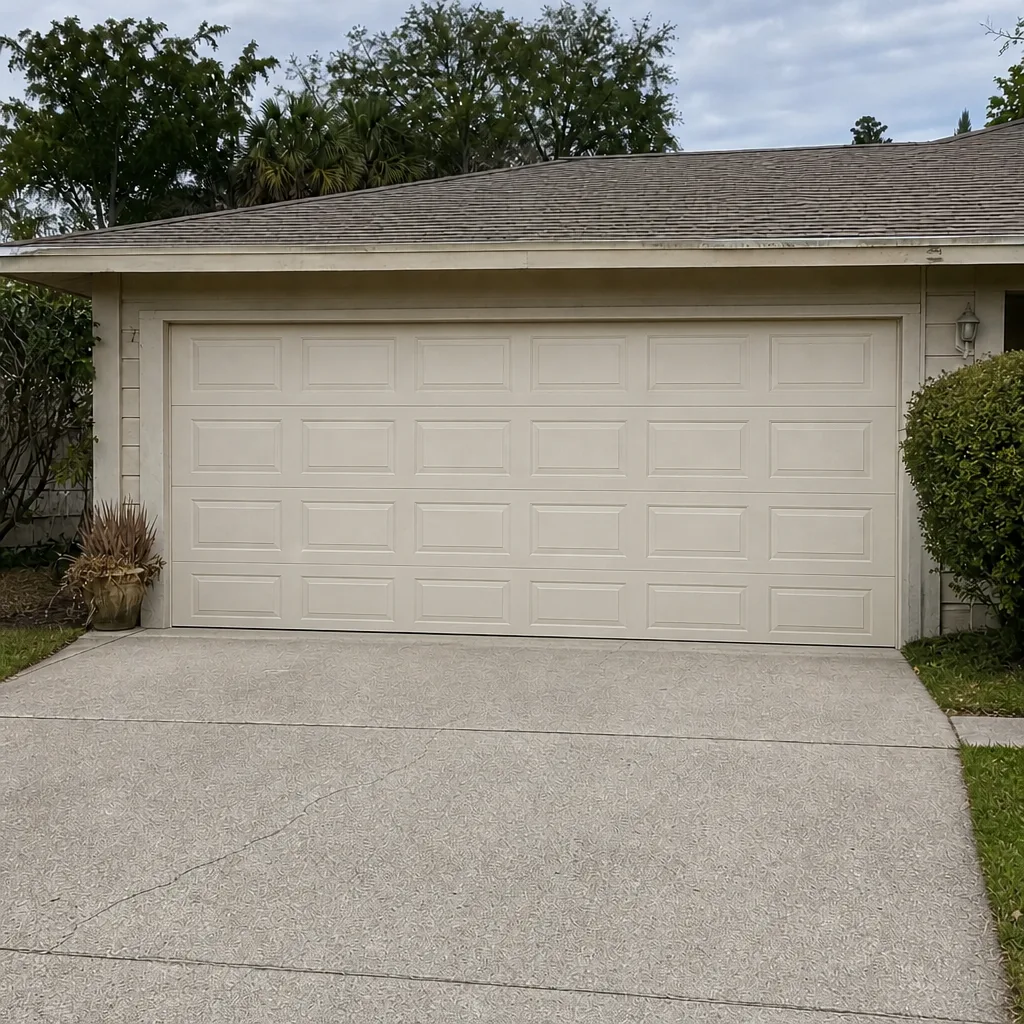 After
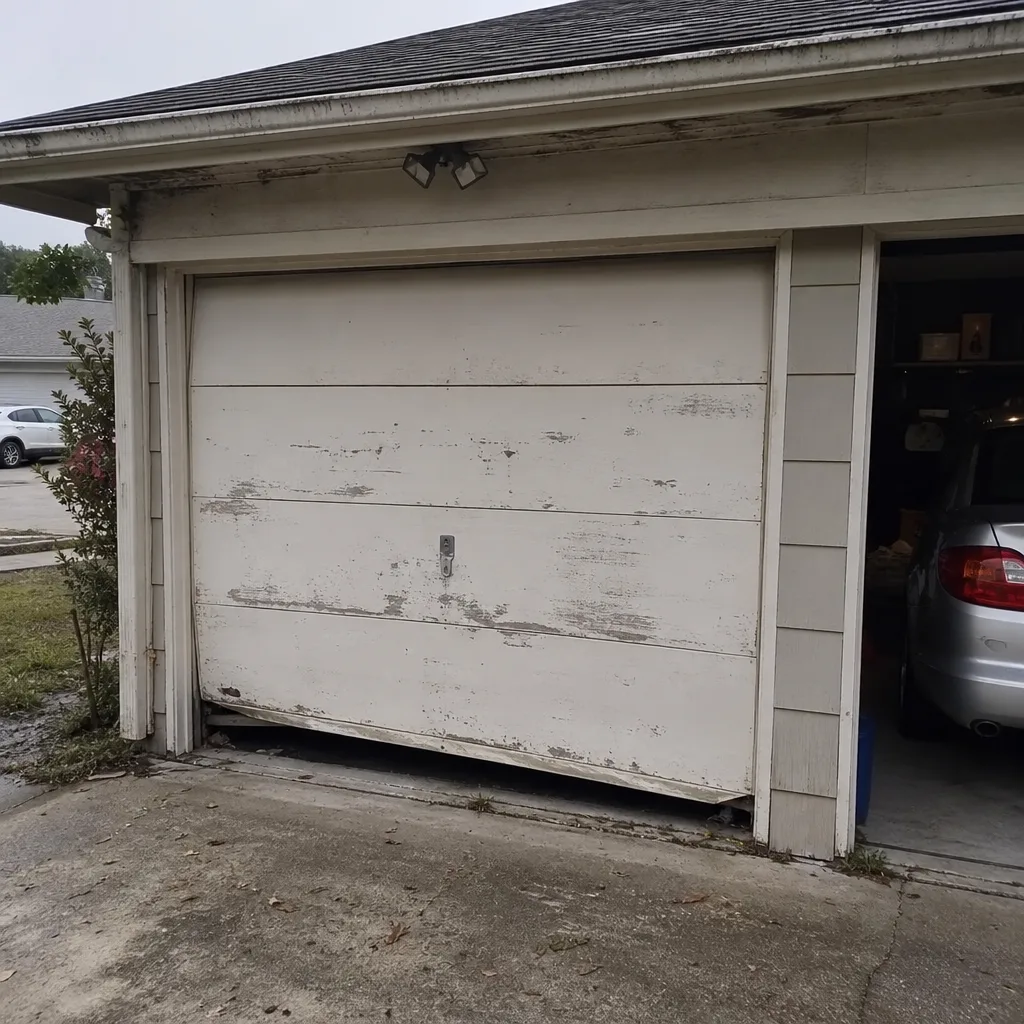 Before
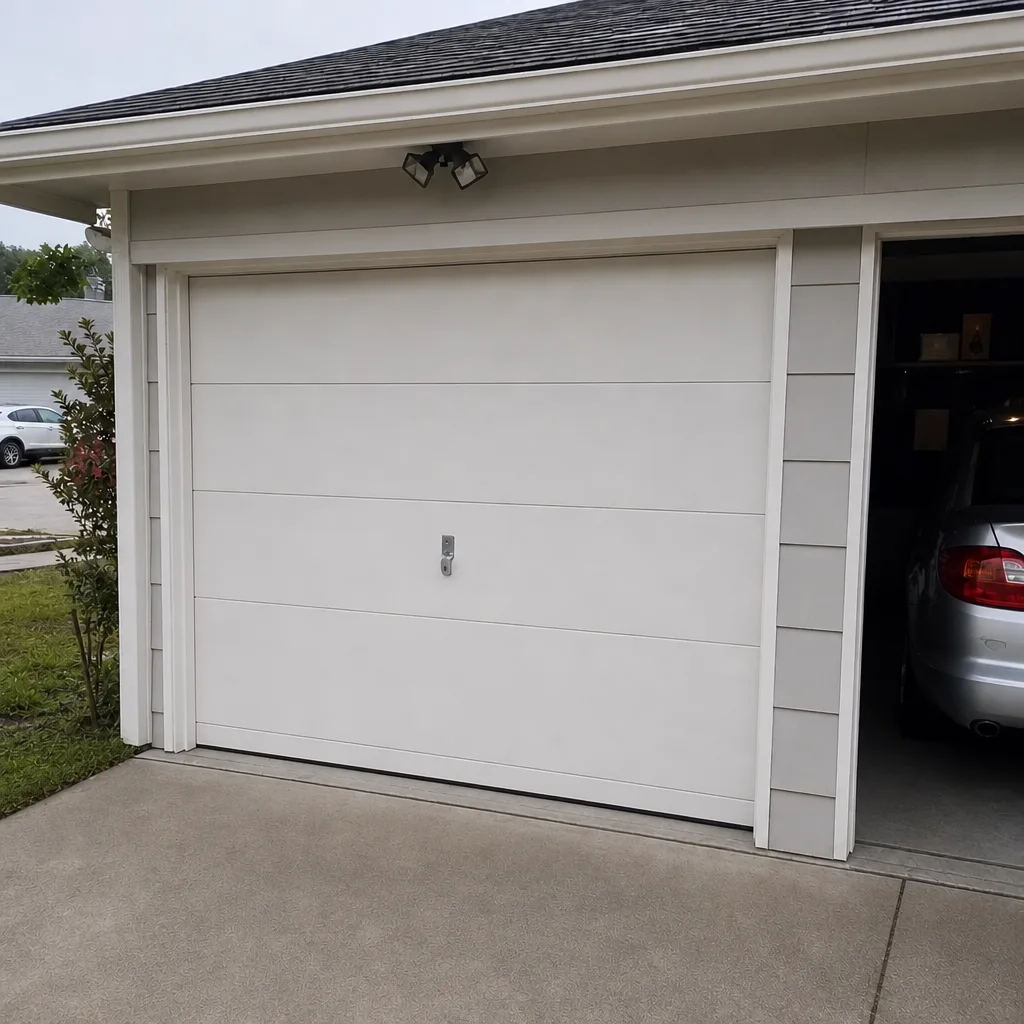 After
When to Call a Professional
Call a professional when you hear a loud bang from the garage and the door won’t lift – that’s usually a spring or cable let go. Call when the door hangs crooked, tracks have bent, or the door no longer sits flush. Call when a spring looks separated at the coil, when a cable shows frayed strands, or when the auto-reverse doesn’t trigger on a test. Call before storm season if you don’t know the wind-load rating on your door, or if your insurer asks. And call if any of the maintenance items above involve a spring or a cable, because those aren’t jobs for a homeowner. A broken spring isn’t just an inconvenience – it’s a safety hazard that needs a trained hand. If the door fails outside normal hours, dedicated emergency garage door repair is exactly what it’s for. Melbourne Garage Door Repair Pros offers free estimates in Melbourne – call (877) 492-2051.
Frequently Asked Questions
Springs in Melbourne often last six to seven years rather than the ten-plus years common in dry climates, because salt air and steady humidity shorten the fatigue life of standard springs. Powder-coated and oil-tempered springs resist this better. If your springs are approaching six years and you can’t remember a service, have them inspected before storm season. Call (877) 492-2051 for a free estimate on replacement.
Most Melbourne homes should carry at least a wind-load-rated door, and whether you need full impact (hurricane) rating depends on your address, your insurer, and current county code. A wind-rated door resists pressure; a hurricane-rated door also takes debris impact. Check the label on your door for a design-pressure number and an impact rating, or ask the county building department for the permit history on your address. Call (877) 492-2051 to have your door checked.
Often yes, if you call early in the day and the parts are on hand – spring repair is one of our core services and we handle it as a priority. A matched pair is strongly preferred over a single spring. Call (877) 492-2051 and we’ll give you a realistic window.
No – the written estimate we give you is the price. We inspect the door, identify the actual fault, and quote the work before anything starts. If we find a second issue while we’re in there, we tell you and you decide; we don’t add it without agreement. Call (877) 492-2051 for a free estimate.
Every three to six months in Melbourne, because salt and humidity accelerate drying and corrosion on hinges, rollers, and springs. Use a garage-door-specific lubricant, not WD-40. If you aren’t comfortable doing it yourself, we do it as part of an inspection.
Our technicians are experienced and the local independent professionals we connect you with are licensed and insured as the state requires. Our technicians have up to 13 years of experience across all major brands. Call (877) 492-2051 to book.
The Bottom Line
A garage door in Melbourne is not the same animal it is in dry, inland climates. Salt air, humidity, and hurricane-season wind loads mean faster corrosion on steel hardware, shorter spring life, and tighter wind-load requirements than a generic guide would have you believe. Match your material to the environment – 24-25 gauge steel with a good base coat, or aluminum if you want corrosion resistance. Know what your wind-load rating is, and if you don’t, find out before storm season. Above all, leave spring and cable work to a trained technician and stay on top of the small stuff. If anything in this guide has you concerned about your door, call (877) 492-2051 for a free estimate – we handle everything from a single spring to a full door replacement in Melbourne, and we work on your brand, whichever of the major brands it happens to be.
Written by the team at Melbourne Garage Door Repair Pros.